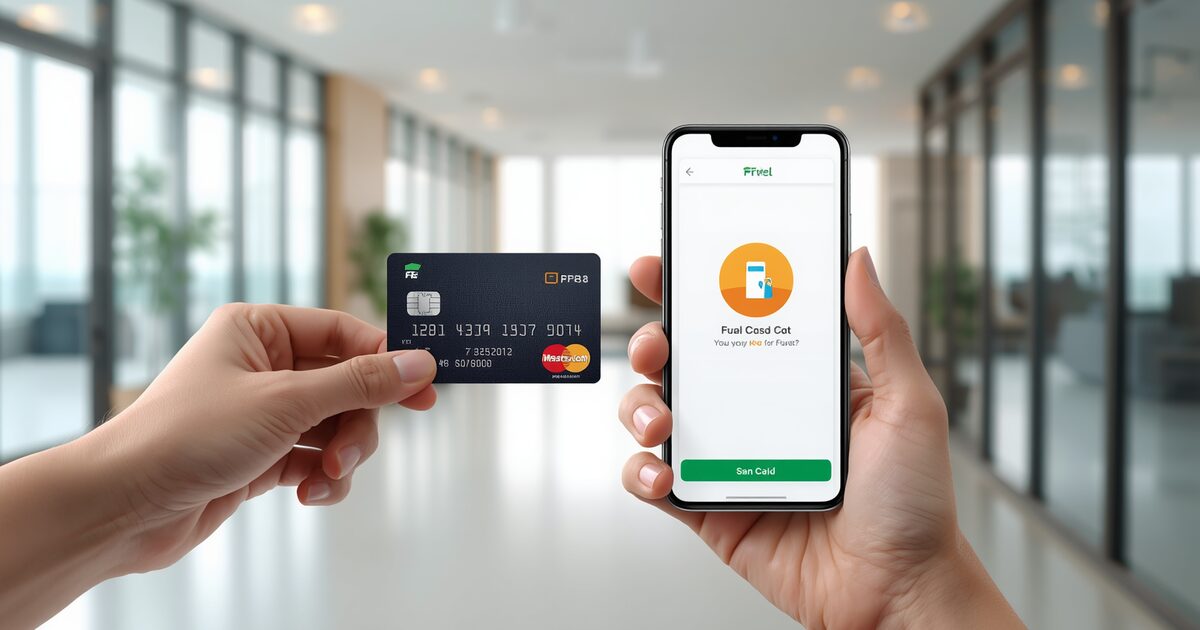
Fuel Cards vs Fuel Apps: Which Saves More Money for UK Businesses in 2026?
At 182.7p diesel and 152.9p petrol, businesses are under margin pressure. We compare fuel cards, fleet apps, and real-time tracking tools for maximum savings.
The Business Fuel Challenge in 2026
UK businesses collectively spend over £40 billion annually on road fuel. With diesel at 182.7p and petrol at 152.9p per litre following the Iran-conflict price spike, fuel has become one of the most significant variable costs for any business operating a fleet — whether that's a sole trader with a single van or a national logistics company with 500 vehicles.
The good news is that the tools available to reduce and manage these costs have never been better. Fuel cards from providers like Allstar, Keyfuels, and DKV offer network discounts and reporting. Apps like FuelFinderLive provide real-time price intelligence. The question is: which approach delivers the most value — and should you use both?
Fuel Cards Explained
A fuel card is essentially a payment card restricted to fuel purchases. When your driver fills up at a participating station, the card records the transaction automatically, capturing the vehicle registration, mileage, fuel type, quantity, and station location. The card provider then invoices the business monthly and provides consolidated VAT receipts — critical for HMRC compliance.
The main UK fuel card networks include Allstar (accepted at 7,500+ sites), Keyfuels (6,400+ sites, strong on motorway), BP Fuel Plus (BP and Esso sites), DKV (pan-European, ideal for international haulage), and Fuelcard People (independent broker offering best-rate cards). Most offer a fixed weekly pump price set below the average market rate, typically 2–5p/litre below the national average.
The main limitations are that fuel cards tie you to specific networks (potentially routing drivers out of their way to the cheapest-within-network station, which may not be the cheapest overall), charge monthly management fees of £2–5 per card, and provide little help with the day-to-day decision of where to fill up most cheaply.
Fuel Apps Explained
Fuel price apps like FuelFinderLive aggregate real-time price data from thousands of stations across the UK. The government's mandatory fuel price reporting scheme, introduced in 2023, requires all stations with more than 3 forecourts to submit live prices every 30 minutes. This data is publicly available and powers apps that show drivers the cheapest fuel nearby.
FuelFinderLive tracks over 7,500 UK forecourts, refreshes prices every 5 minutes, and lets drivers filter by fuel type, distance, and brand. A driver who consistently fills at the cheapest local station rather than the nearest convenient one can save 8–12p per litre — equivalent to £4.40–£6.60 per 55-litre fill. For a van doing 3 fills per week, that's over £1,000 annually.
Fuel Cards vs Apps: Side-by-Side
| Feature | Fuel Card | Fuel App |
|---|---|---|
| Average price saving | 2–5p/litre | 8–12p/litre |
| HMRC VAT receipts | ✓ Automatic | ✗ Manual |
| Mileage tracking | ✓ Built-in | Some apps |
| Station network lock-in | Yes | No |
| Monthly fee | £2–5/card | Free–£5/month |
| Suitable for fleets | ✓ Excellent | ✓ Good |
| Sole traders | ✓ Available | ✓ Ideal |
| Real-time price data | ✗ Fixed weekly rate | ✓ Live |
HMRC & Tax Compliance
For businesses that claim VAT back on fuel, proper records are essential. HMRC requires a VAT receipt for every fuel purchase. Fuel cards generate consolidated monthly VAT invoices — a major administrative advantage. App-guided purchases at any station require drivers to keep paper or digital receipts, which is feasible for small fleets but becomes a significant administrative burden at scale.
If you're on a fuel card scheme, check whether the provider offers API integration with accounting software like Xero or QuickBooks. Many now do, allowing automatic categorisation of fuel costs without manual data entry.
The Hybrid Strategy
The highest-performing businesses use both tools in tandem. The fuel card handles compliance, VAT reporting, and fraud prevention. The fuel app ensures drivers always fill at the cheapest station within the card's accepted network — or justifies a deliberate trip to a cheaper out-of-network station when the saving exceeds the extra mileage cost.
A simple rule of thumb: if an app shows a station 2 miles off-route that is 6p/litre cheaper on a 60-litre fill, the saving (£3.60) exceeds the cost of the detour (approximately £0.50 in fuel and time). Use the app to identify these opportunities, and the card to pay and capture the data.
The Verdict for Different Businesses
For sole traders and micro-businesses with 1–2 vehicles, a fuel app alone — particularly FuelFinderLive — delivers the best return on the lowest investment. Just using the app to find the cheapest station saves far more than any card fee. For SMEs with 3–20 vehicles, combining a mid-tier fuel card (Allstar or BP Fuel Plus) with a fuel price app is the optimal strategy. For large fleets of 20+ vehicles, enterprise fuel card programmes from DKV or Keyfuels with integrated telematics, combined with fleet-wide access to FuelFinderLive, delivers maximum control and savings.
Find the Cheapest Fuel Near You
Use FuelFinderLive to compare live petrol and diesel prices at stations in your area.
⛽ Find Fuel Now