Fuel Duty & VAT: Why Is UK Petrol So Expensive Compared to Other Countries?
At 152.9p/litre, UK petrol is among the most expensive in Europe. We break down exactly how much is tax and duty, compare global rates, and examine government options.
The Price Breakdown: Where Your Money Goes
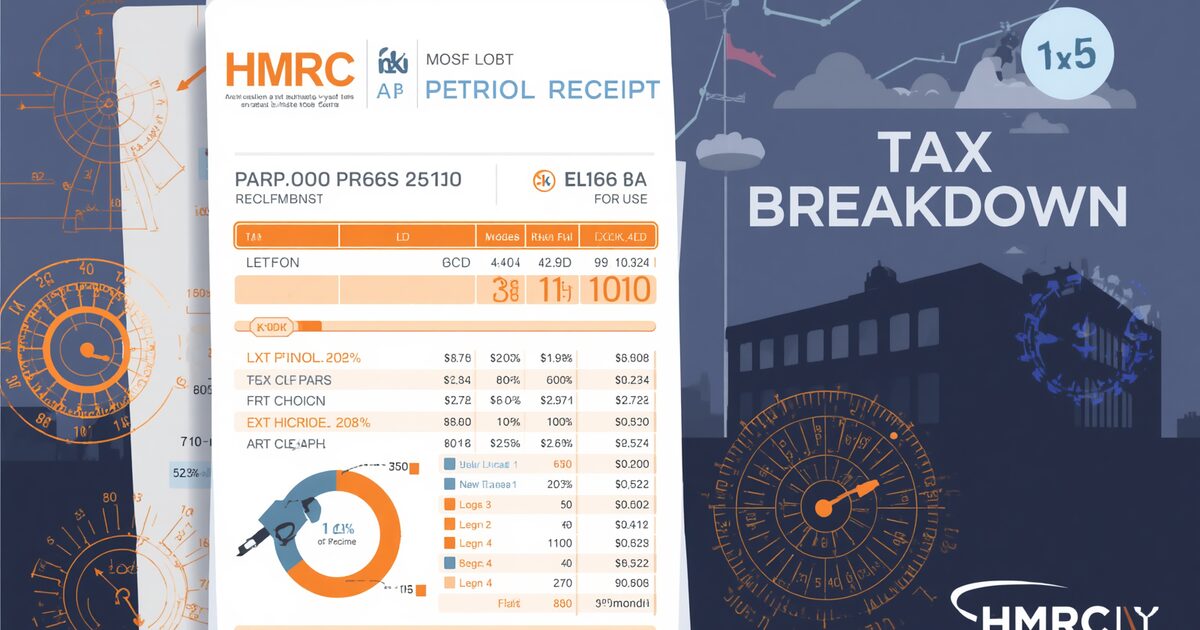
At 152.9p per litre for petrol in March 2026, it is worth understanding exactly what you are paying for. The price comprises three main components: the pre-tax wholesale cost of the fuel itself (crude oil refining, transport and retailer margin), fuel duty charged by the government, and VAT at 20% applied to the entire pump price including the duty.
| Component | Amount (p/l) | % of Price |
|---|---|---|
| Wholesale cost (crude + refining + margin) | 74.4p | 48.7% |
| Fuel duty | 52.95p | 34.6% |
| VAT (20% on total) | 25.5p | 16.7% |
| Total pump price | 152.9p | 100% |
The combined tax take (duty plus VAT) is 78.45p per litre — meaning 51.3% of what you pay at the pump goes directly to the Treasury. On a typical annual mileage of 8,000 miles at 40 MPG with a 55-litre tank, a UK driver pays approximately £1,033 in fuel taxes annually.
Fuel Duty Explained
Fuel duty is a flat excise tax charged per litre of fuel sold. The current rate is 52.95p per litre for both petrol and diesel following the 5p per litre cut introduced in the March 2022 Spring Statement — a cut that remains in place in 2026 following successive freezes. Before 2022 the rate had been frozen at 57.95p since 2011, meaning duty has actually fallen in real terms for 15 years when adjusted for inflation. Fuel duty is the government's third largest single tax revenue source after income tax and National Insurance, generating approximately £25 billion annually.
VAT on Fuel: Tax on a Tax
VAT is applied at 20% to the entire pump price — including the fuel duty component. This means you effectively pay VAT on the tax itself. The VAT charged on the duty portion alone amounts to approximately 10.6p per litre. The Revenue Scotland and HMRC jointly receive this VAT revenue, which is not hypothecated to road spending. Business fuel purchases qualify for 50% VAT recovery on car fuel and 100% VAT recovery on commercial vehicle fuel, provided proper records are kept — another reason fuel cards with VAT receipts are important for business users.
How the UK Compares Globally
| Country | Petrol Price (p/l equiv.) | Tax % of Price |
|---|---|---|
| Netherlands | 175p | 64% |
| UK | 153p | 51% |
| France | 162p | 55% |
| Germany | 161p | 53% |
| USA | 75p | 18% |
| Saudi Arabia | 15p | <5% |
Approximate figures, March 2026. Exchange rate fluctuations affect comparisons.
A History of UK Fuel Duty
UK fuel duty has been a significant revenue tool since the 1990s when the "fuel duty escalator" deliberately raised duty above inflation each year to discourage driving and fund public finances. The escalator was abandoned in 1999 following widespread protests, including the fuel crisis of September 2000 when blockades of refineries by truckers and farmers brought the country to a near-standstill within days. Since 2011 duty has been frozen repeatedly by successive Chancellors, making fuel tax policy increasingly politically sensitive. The 2022 5p cut was the first reduction in over 20 years.
Government Options for Relief
The government has several levers available if it chooses to reduce fuel costs. A further cut in fuel duty — say another 5p per litre — would cost approximately £2.5 billion annually in lost revenue. Reducing VAT on fuel to 5% (the reduced rate applied to domestic energy) would save drivers approximately 16p per litre but cost the Treasury over £8 billion per year. The government could also introduce a temporary price cap mechanism triggered when petrol exceeds a threshold price, similar to the energy price cap — though this creates significant market distortion risks. None of these options is currently planned, with the Treasury prioritising deficit reduction.
What Drivers Can Do
While you cannot control government tax policy, you can control which station you choose and how efficiently you drive. Since duty and VAT are fixed per litre, the only variable element is the wholesale cost and retailer margin — which is where the 8–15p variation between local stations sits. Use FuelFinderLive to minimise the wholesale/margin component you pay. Combine this with fuel-efficient driving techniques and you can reduce your effective spend per mile even in a high-tax, high-price environment.
Find the Cheapest Fuel Near You
Use FuelFinderLive to compare live petrol and diesel prices at stations in your area.
⛽ Find Fuel Now