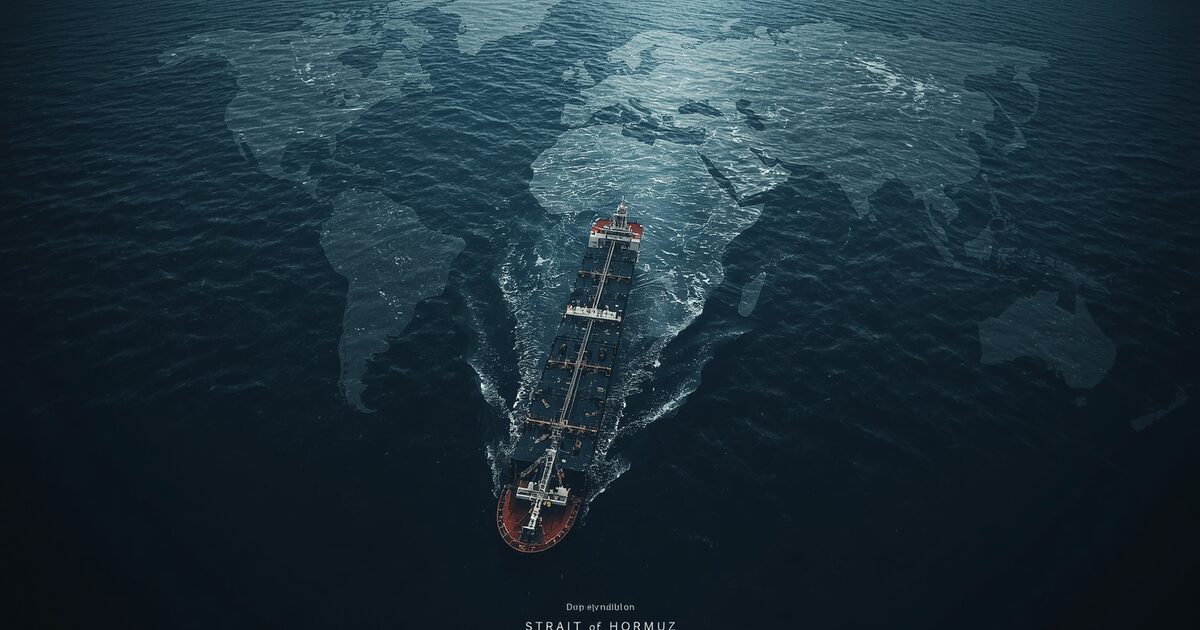
Strait of Hormuz Closure: What It Means for UK Petrol & Diesel Prices
A narrow 21-mile waterway between Iran and Oman carries 21% of the world's oil. When that chokepoint is threatened, UK petrol prices respond in hours.
What Is the Strait of Hormuz?
The Strait of Hormuz is a 21-mile wide waterway separating Iran to the north from Oman and the UAE to the south. It connects the Persian Gulf — home to the world's largest concentration of oil reserves — to the Gulf of Oman and the Arabian Sea, through which tankers reach global markets. Despite its modest width, the navigable channel for laden supertankers is only about 2 miles wide in each direction, making it an extraordinarily concentrated chokepoint for global energy flows.
The strait lies almost entirely within Iranian territorial waters on one side and Omani territorial waters on the other. Iran has historically used this geographical reality as both a diplomatic lever and a military threat. The country maintains a significant naval presence in the region and has developed anti-ship missile capabilities specifically designed to deter tanker traffic.
How Much Oil Transits the Strait?
Approximately 21 million barrels of oil per day flow through the Strait of Hormuz — equivalent to about 21% of all global petroleum liquids consumption and roughly 27% of globally traded oil. The countries whose exports depend on Hormuz include Saudi Arabia (approximately 6.5 million barrels/day exported through Hormuz), UAE (2.5 million), Kuwait (1.7 million), Iraq (via Basra, 3.5 million), Qatar (LNG as well as oil, 3.6 million barrels oil equivalent), and Iran itself (approximately 1.5 million when not under sanctions). There is simply no waterway of comparable importance to global energy security anywhere on Earth.
UK Dependence on Hormuz Oil
The UK's direct crude oil imports from Hormuz-dependent countries are relatively modest — the majority of UK crude imports come from Norway, the USA, and Kazakhstan. However, indirect dependence is significant. European refineries that supply the UK with refined products (particularly diesel, following the Grangemouth closure) source crude from Gulf states. Insurance costs for UK-bound tankers from all Gulf origins rise dramatically when the Strait is threatened, even if the vessels are not transiting Hormuz. And crucially, crude oil is priced on global markets — a Hormuz disruption raises the global price that UK refineries pay for Norwegian and US crude as well, because all crude is ultimately a substitute for Hormuz crude in a supply-constrained market.
What Would Closure Mean for UK Prices?
A complete, sustained Strait closure is an extreme tail-risk scenario that has not occurred in history. Nevertheless, energy agencies model it regularly. The IEA estimates that a full Hormuz closure sustained for 30 days would reduce global oil supply by 15–17 million barrels per day (after partial offset from strategic reserve releases and alternative routes). Brent crude would be expected to spike to $150–$200/barrel within the first week — levels not seen since the 2008 peak. UK petrol could reach 190–220p per litre and diesel could approach or exceed £2.50/litre. The government would invoke emergency powers under the Energy Act 2023 and participate in IEA coordinated reserve releases, which would partially — but not fully — offset the supply shock.
Alternative Routes & Reserves
Two pipeline alternatives to the Strait exist. The East-West Pipeline (EWP) across Saudi Arabia runs from Abqaiq to Yanbu on the Red Sea coast, with a capacity of approximately 5 million barrels per day. The Habshan-Fujairah pipeline in the UAE bypasses Hormuz entirely, with a capacity of approximately 1.5 million barrels per day. Together these can divert approximately 6.5 million barrels per day — roughly 30% of normal Hormuz flow. The remaining 14.5 million barrels per day has no viable alternative routing, making a full closure devastating for global markets regardless of reserve releases.
Strategic petroleum reserves held by IEA member countries (including the UK) amount to approximately 1.5 billion barrels — equivalent to roughly 120 days of IEA member consumption. A coordinated release of 6 million barrels per day would extend effective buffer for approximately 8 months, but at declining rates as reserves are drawn down.
Historical Hormuz Threats & Outcomes
Iran has threatened to close the Strait on multiple occasions: 2012 (during nuclear sanctions), 2019 (following US tanker seizures), and 2020 (following the killing of General Soleimani). In each case, oil prices spiked significantly at the time of the threat but recovered when closure did not materialise. The 2012 threats drove Brent to $128/barrel before easing. The 2019 tanker seizures pushed oil up $3–5/barrel for several weeks. The lesson from history is that the risk premium from Hormuz threats is real but tends to resolve without actual closure — partly because Iran's economy also depends on oil revenues and the strait being used, and partly because US naval presence provides a deterrent to full closure.
What UK Drivers Should Do
In the current environment of elevated Hormuz risk from the Iran conflict, the practical actions for UK drivers are straightforward. Fill your tank rather than running on low — not as panic buying but as sensible risk management. Use FuelFinderLive to ensure you are always filling at the cheapest available local station — the money saved now builds financial resilience for higher prices later. Review whether your regular driving could be reduced through WFH days, carpooling, or journey consolidation. And if you are planning a vehicle change in the next 1–2 years, factor the current geopolitical context into your choice — the case for a full hybrid or EV is stronger than at any point in the past decade.
Find the Cheapest Fuel Near You
Use FuelFinderLive to compare live petrol and diesel prices at stations in your area.
⛽ Find Fuel Now