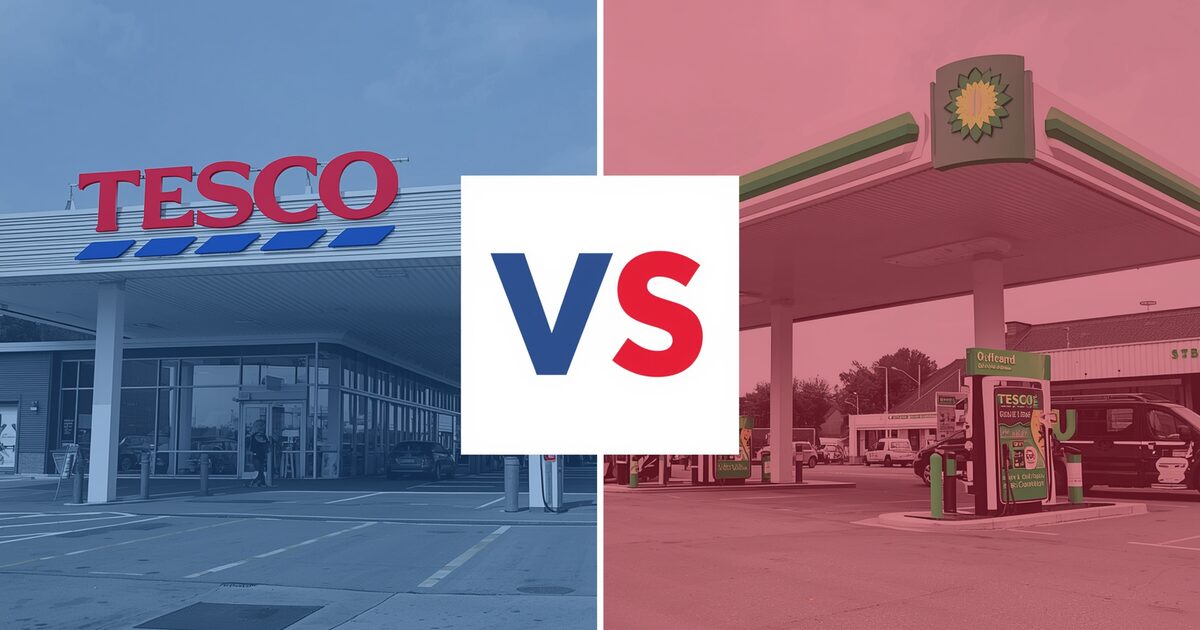
Supermarket Petrol vs Branded Petrol: Which Is Really Cheaper in 2026?
Supermarket fuel is typically 6.2p cheaper per litre. But is it inferior to Shell, BP, or Esso? We analyse the evidence on quality, performance, and engine wear.
The Price Gap Explained
In March 2026, the average UK supermarket petrol price is approximately 146.7p per litre versus a national average (including branded stations) of 152.9p — a gap of 6.2p. Branded stations (Shell, BP, Esso, Texaco) typically sit 5–10p above the supermarket average, with premium forecourts at motorway services and town centres charging the most. The gap exists for a simple structural reason: supermarkets use fuel as a footfall-driving loss leader, while branded operators need to make margin from fuel sales themselves.
Is Supermarket Fuel Lower Quality?
No. All petrol and diesel sold at UK retail forecourts must meet European Standard specifications: EN 228 for unleaded petrol and EN 590 for diesel. These standards define minimum and maximum limits for dozens of parameters including octane rating, sulphur content, aromatics, benzene, and in the case of diesel, cetane number and cold flow properties. HMRC and the Petroleum Enforcement Authority conduct random sampling of retail fuel to verify compliance. Supermarket fuel that fell below these specifications would be subject to immediate withdrawal and prosecution.
The practical implication: the base fuel you put into your car at Asda is chemically identical — within EN 228 specification tolerances — to the base fuel at a nearby Shell or BP. Your engine cannot tell the difference.
Branded Additives: Worth the Premium?
The genuine difference between branded and supermarket fuels lies in the additive packages. Shell V-Power, BP Ultimate, Esso Supreme, and Texaco Supreme all contain proprietary additive cocktails — cleaning agents (detergents), friction modifiers, corrosion inhibitors, and in some cases deposit-control additives — over and above the EN 228 minimum requirements. These additives are real, have documented effects, and are the reason branded fuels can legitimately claim superiority in certain contexts.
The key question is whether these additive benefits are worth 5–10p per litre — and for the vast majority of drivers, the evidence says no. The additive benefits are most relevant for high-mileage engines with existing carbon deposits (where cleaning additives can restore some lost economy) and for turbocharged or high-compression engines where friction reduction additives provide measurable benefit. For a typical family car covering 10,000 miles per year with regular service intervals, the additives in supermarket fuel (which must still include some baseline detergents under WWFC Category 1 standards) are adequate for clean injector operation.
What Engine Tests Show
Independent testing of supermarket versus branded fuel has been conducted by several organisations including Which?, Auto Express, and academic institutions. The consistent findings: in real-world MPG tests, supermarket fuel delivers statistically identical economy to branded fuel in the same vehicle. In laboratory injector cleanliness tests over extended use, branded fuels with premium additive packages show marginally better injector deposit control — but the difference only becomes measurable after 50,000+ miles. In short-term tests (under 30,000 miles), no statistically significant difference in engine condition is detectable between premium branded and supermarket fuels in standard engines.
The Maths: Annual Cost Comparison
For a driver doing 10,000 miles at 40 MPG (250 litres per 100 miles, 1,136 litres annually): filling exclusively at branded stations at 8p average premium over supermarkets costs an additional £91 per year. This is the annual cost of the branded additive package. If you genuinely value the additives, £91/year is not unreasonable. If the additives provide no measurable benefit for your vehicle, £91 is wasted. Drivers doing higher mileage (15,000 miles) waste £136/year on brand premium. This is the annual saving available by switching to supermarket fuel — available to most drivers at zero sacrifice in fuel quality for their specific vehicle.
When Branded Fuel Is Worth It
There are scenarios where branded premium fuel genuinely earns its price premium. High-performance turbocharged engines specifically designed for 97–99 RON fuel (such as those in BMWs, Audis, and performance Fords) benefit from premium fuel in both performance and potentially economy — check your handbook for the manufacturer's recommended minimum octane rating. High-mileage vehicles (100,000+ miles) with existing injector deposits may benefit from a few tanks of premium branded fuel to clean deposits before returning to supermarket fuel. Prestige vehicles where the manufacturer explicitly recommends branded fuel as part of the warranty conditions (rare but exists for some exotics). Beyond these specific cases, supermarket fuel at 6.2p less per litre is the rational choice.
The Verdict
For the vast majority of UK drivers in standard family and fleet vehicles, supermarket petrol is not inferior to branded fuel — it is simply cheaper. The quality specifications are legally mandated to be equivalent. The additive difference matters for specific engine types and high mileage vehicles but not for typical use. Switch to the cheapest supermarket forecourt near you, use FuelFinderLive to confirm today's cheapest price, and save the £91–£136 annually that most drivers waste on brand premium that provides no measurable benefit for their vehicle.
Find the Cheapest Fuel Near You
Use FuelFinderLive to compare live petrol and diesel prices at stations in your area.
⛽ Find Fuel Now