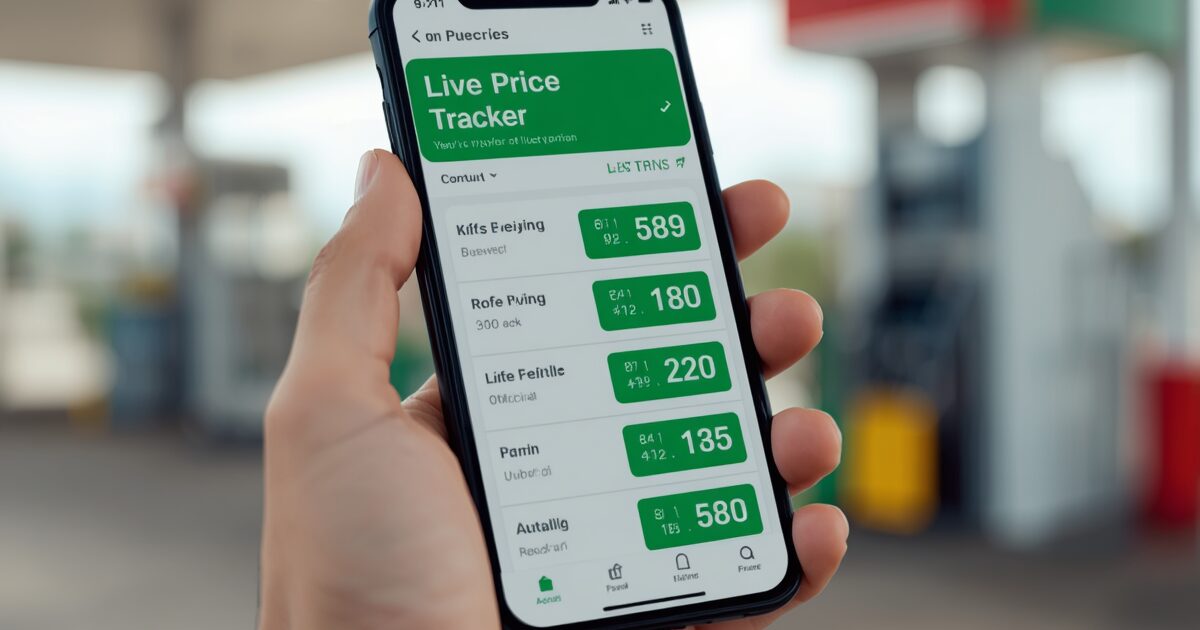
How to Track Fuel Prices in Real-Time with FuelFinderLive
FuelFinderLive tracks 7,500+ stations, updating every 5 minutes. Learn how to use price alerts, history graphs and route planning to minimise every fill-up cost.
Why Real-Time Price Tracking Matters
In stable fuel markets, the difference between the cheapest and most expensive station near you might be 3–5p per litre — meaningful but not urgent to track daily. In volatile markets like March 2026, where prices are moving 2–5p in a single day, real-time tracking becomes genuinely valuable. A station that is cheapest in the morning may be 8p above its neighbour by afternoon as operators respond to wholesale price movements at different speeds. Without real-time data, you are making fill-up decisions based on potentially stale information.
The government's mandatory fuel price reporting scheme, introduced in October 2023, fundamentally changed what is possible in fuel price tracking. Before 2023, the best data available came from crowd-sourced user reports — inherently variable in timing and accuracy. The mandatory government feed provides standardised, near-real-time data from every major forecourt in the UK, updated whenever a station changes its price and at minimum every 30 minutes.
The Government Data Feed
Under the Motor Fuel (Transparency of Pricing) Regulations 2023, all UK petrol stations with more than 3 forecourts are legally obligated to submit their current pump prices via a standardised API. The data is published as an open data feed, freely accessible to developers and data providers. The feed includes the station name, brand, address, coordinates, and current prices for all fuel types offered. FuelFinderLive processes this feed in real time, normalising the data and making it searchable and visualisable through our user interface.
The compliance rate for the mandatory reporting scheme is high — HMRC and DESNZ enforce reporting obligations, and the vast majority of covered stations submit prices accurately and promptly. Where we identify systematic reporting gaps or anomalies, we flag these and supplement with our own verification data.
FuelFinderLive's Real-Time Features
Our platform processes the government data feed every 5 minutes, updating prices displayed on the map and list views. Key real-time features include: a live map showing current prices at every tracked station in your area, colour-coded from green (cheapest) to red (most expensive) within your search radius; a continuously updated ranked list of stations by price with last-updated timestamps so you can see how fresh each price reading is; a "Price movement" indicator showing whether a station's price has risen or fallen since yesterday; and a heat map view showing price levels across a wider geographic area for journey planning. These features collectively give you the information needed to make the optimal fill-up decision on any given day.
Setting Up Price Alerts
FuelFinderLive's price alert feature (requires a free account) lets you set a threshold price for petrol or diesel in your area. When any station within your specified radius drops below that threshold, you receive a notification via email or browser push notification. This is particularly valuable during volatile markets: rather than checking the app several times a day, you set your alert and let the system do the monitoring. To set a useful alert, review the past 30-day price history for your area and set the threshold 3–5p below the current average — this catches genuine dips without triggering false alerts from normal daily fluctuations.
Using Price History for Better Decisions
The price history graph available for any individual station shows daily prices over the past 30 days. This gives you several useful insights. You can identify whether a station is consistently one of the cheapest in the area (in which case it is a reliable default) or whether it is only cheap periodically (suggesting tactical use when it is running a promotion). You can see how quickly a station responds to wholesale price changes — some operators update within hours of a market move while others lag by 2–3 days. You can identify seasonal patterns — some independent stations hold prices higher on weekends when demand peaks. All of this information helps you build a mental model of your local fuel market that makes subsequent fill-up decisions faster and more profitable.
Mobile vs Desktop Use
FuelFinderLive is fully optimised for mobile browsers — no app download required. On mobile, the location permission grants access to your current GPS position, making "find cheap fuel near me" a single-tap action. The map view is designed for touch interaction with intuitive pinch-to-zoom and station pin tapping. For pre-journey planning on desktop, the wider screen makes it easier to identify fuel stops along a route or compare prices across a wider area. We recommend bookmarking FuelFinderLive on your phone's home screen for one-tap access before every fill-up.
Business & Fleet Tracking Features
For business users and fleet managers, FuelFinderLive offers additional capabilities. The route planning tool identifies the cheapest fuel stations along a specified A-to-B route, helping fleet managers brief drivers on optimal fill-up locations for regular routes. The regional price report (available weekly by email subscription) provides average prices by region, brand, and fuel type — useful for budgeting and supplier negotiations. API access to our price data is available for enterprise fleet management system integrations — contact us at business@fuelfinderlive.co.uk for API documentation and commercial licensing terms.
Find the Cheapest Fuel Near You
Use FuelFinderLive to compare live petrol and diesel prices at stations in your area.
⛽ Find Fuel Now