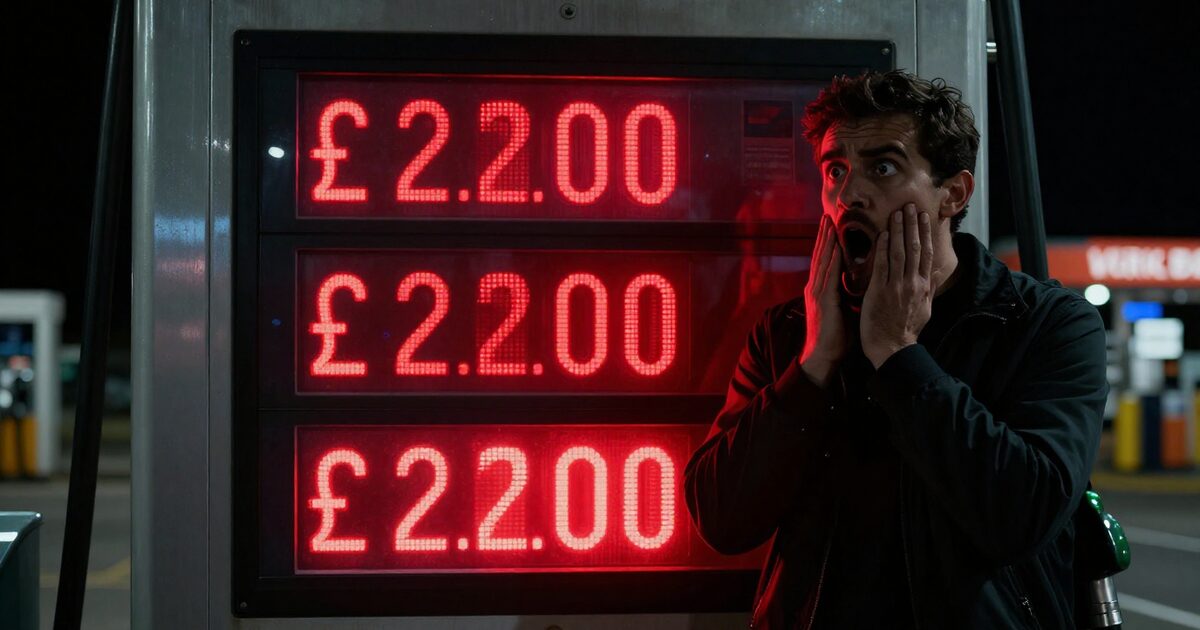
UK Energy Crisis 2026: Could Petrol Really Hit £2 Per Litre?
At 152.9p, UK petrol is already at a 16-month high. We analyse expert forecasts, historical crises, and the exact price scenarios that would push petrol to £2/litre.
Current Situation: 152.9p and Rising
UK average petrol reached 152.9p per litre in the week ending 31 March 2026 — the highest level since July 2022's record peak of 191.5p, and a 10% increase from the start of the year. The immediate driver is the Iran conflict that began on 28 February, which pushed Brent crude from $82 to $107/barrel in 32 days. Diesel has risen even more sharply to 182.7p — creating severe pressure for commercial transport, agriculture, and heating oil users.
The £2 threshold (200p per litre) sits 47p above current petrol prices — approximately 30% further rise from here. It has never been breached in UK retail history, though it was approached at the July 2022 peak (when some motorway stations briefly exceeded 199p). Understanding the conditions that would be required to reach it is both intellectually useful and practically important for planning.
Historical Context: Previous Price Peaks
| Event | Date | UK Petrol Peak | Brent Crude |
|---|---|---|---|
| 2008 Financial Crisis Peak | July 2008 | 119.7p | $147 |
| Libya Crisis | April 2012 | 142.5p | $128 |
| Russia-Ukraine War | July 2022 | 191.5p | $111 |
| Iran Conflict (to date) | March 2026 | 152.9p | $107 |
Note: 2022 prices were higher than current despite lower Brent because GBP was significantly weaker vs USD at that time.
What Would Push Petrol to £2?
For petrol to reach 200p/litre from the current 152.9p, three conditions would need to align. First, a further significant rise in Brent crude — to approximately $140–150/barrel, a level not seen since the immediate aftermath of the 2022 Russia-Ukraine shock and previously only in the brief 2008 spike. This would require either a Strait of Hormuz partial closure, a major escalation of the Iran conflict to include Saudi or UAE production disruption, or a broader OPEC+ supply cut coinciding with conflict escalation. Second, a weakening of sterling against the dollar — if GBP fell from £1=$1.27 to £1=$1.10, this alone would add approximately 10–12p to UK pump prices on unchanged crude. Third, retail margin expansion — in periods of rapid price rises, some retailers expand margins beyond their usual levels, compounding the wholesale cost increase.
Probability Assessment
Major energy analysts broadly assess the probability of UK petrol reaching £2/litre in 2026 at 10–18%. This reflects the genuine tail risk of Hormuz disruption or conflict escalation while acknowledging that the more likely scenario is a prolonged stalemate rather than dramatic further escalation. Goldman Sachs commodity research puts Brent at $95–115 as the central range for 2026, which maps to UK petrol of 148–162p under current exchange rates. The £2 scenario requires both Brent at $140+ AND GBP weakness — a combination assessed at below 15% probability by most analysts.
Government Response Options
If petrol approached £2/litre, the political pressure for government intervention would be intense. The available tools include: emergency fuel duty cut (reversing the 2022 5p cut and cutting further, at a cost of £2.5 billion per percentage point cut); coordinated IEA strategic reserve release (as used in 2022); temporary windfall tax on oil company profits to fund rebates; and demand-side interventions such as temporary motorway speed limit reductions to 60mph (saving approximately 5% in national fuel consumption). None of these is currently planned or hinted at, suggesting government is not treating £2 petrol as an imminent baseline scenario.
Economic Impacts of £2 Petrol
£2/litre petrol would add approximately 1.2–1.5 percentage points to UK CPI inflation directly, and a further 0.8–1.2 points indirectly through higher transport costs feeding into goods prices and services. The Bank of England would face an acute dilemma: raise interest rates to control inflation (worsening the housing affordability crisis) or hold rates and risk inflation expectations becoming unanchored. The RAC estimates each 10p/litre rise in petrol adds approximately £220/year to the average household's costs. A 47p rise from current levels would add over £1,000 per household per year in direct fuel costs alone.
How to Prepare
Preparing for potentially higher fuel prices does not require hoarding jerry cans or making dramatic lifestyle changes. The sensible steps are: use FuelFinderLive consistently to minimise what you pay relative to the market average; improve your vehicle's fuel efficiency through the driving techniques and maintenance steps outlined across our other guides; evaluate whether your vehicle refresh cycle aligns with switching to a lower-consumption alternative; and review whether your monthly budget has appropriate contingency for fuel cost increases. The drivers who will be most financially resilient if petrol does reach record levels are those who have already reduced their per-mile fuel cost through the measures available today.
Find the Cheapest Fuel Near You
Use FuelFinderLive to compare live petrol and diesel prices at stations in your area.
⛽ Find Fuel Now