UK Energy Security in 2026: Should Drivers Worry About Fuel Shortages?
High prices hurt your wallet. But actual fuel shortages (can't buy fuel at any price) are a different crisis. We analyse what would need to happen to trigger real shortages and whether the UK is prepared.
Price Crisis vs Supply Shortage: The Difference
There is a critical distinction between a fuel price crisis (expensive but available) and a fuel supply shortage (unavailable at any price). In March 2026, the UK is experiencing a price crisis — petrol at 152.9p and diesel at 182.7p is painful but fuel is available at every forecourt. A genuine shortage — where petrol stations run dry and drivers cannot buy fuel regardless of willingness to pay — is a qualitatively different event requiring different responses and driven by different causes.
Price crises are driven by global market forces (geopolitics, OPEC decisions, supply disruptions) and affect every country simultaneously. Supply shortages are typically caused by domestic logistical failures (as in the 2021 HGV driver shortage) or physical infrastructure disruption (pipeline damage, refinery fire, import terminal closure). Understanding which type of crisis you are facing determines the appropriate response.
How the UK Fuel Supply Chain Works
UK fuel reaches forecourts through a complex supply chain with multiple nodes. Crude oil arrives at import terminals (Immingham, Fawley, Milford Haven, Grangemouth before closure) by supertanker. UK refineries (currently primarily Fawley, Stanlow, Lindsey, and Valero Pembroke after Grangemouth's closure) process crude into petrol, diesel, and other products. Refined product is stored in regional distribution terminals (there are approximately 75 major terminals across the UK). Road tankers collect product from terminals and deliver to individual forecourts, typically every 2–5 days. Forecourt tanks hold 30,000–60,000 litres, equivalent to 1–3 days of normal throughput.
The supply chain's vulnerability is at the distribution stage — if road tanker deliveries are disrupted (as in 2021 due to HGV driver shortage), forecourt tanks run down within days even if refineries are operating normally and terminals are full.
UK Strategic Petroleum Reserves
The UK maintains strategic petroleum reserves (SPR) as required by IEA membership obligations — equivalent to 90 days of net import requirement. These are held as a combination of government-owned stocks and industry obligation stocks (where oil companies are required to hold minimum quantities). The exact volume and location of SPR stocks is not publicly disclosed for security reasons, but estimates suggest approximately 20–25 million tonnes of oil equivalent held across refineries, terminals, and dedicated storage facilities.
In a genuine supply crisis, the government can release SPR stocks to the market to supplement commercial supply. The IEA coordinates collective reserve releases among member countries for international supply disruptions — as occurred in March 2022 (Ukraine war) and November 2021 (post-COVID demand surge). The UK participates in these coordinated releases, which can add significant volume to markets quickly but are designed as bridging measures while underlying supply disruptions are resolved.
What Would Trigger Real Shortages?
A genuine UK fuel shortage in 2026 would require one or more of: a catastrophic domestic supply chain event (major refinery fire or pipeline rupture without sufficient import capacity to compensate), a severe port disruption preventing import terminal operations (extreme weather, industrial action, or security incident), a repeat or worsening of the 2021 road tanker driver shortage (currently assessed as unlikely given the driver shortage has since been partially resolved through overseas recruitment and pay increases), or a Strait of Hormuz closure severe enough to reduce global oil supply beyond what strategic reserve releases can compensate for (the most severe tail risk scenario). None of these is considered a high-probability event in isolation for 2026.
Lessons from the 2021 Fuel Crisis
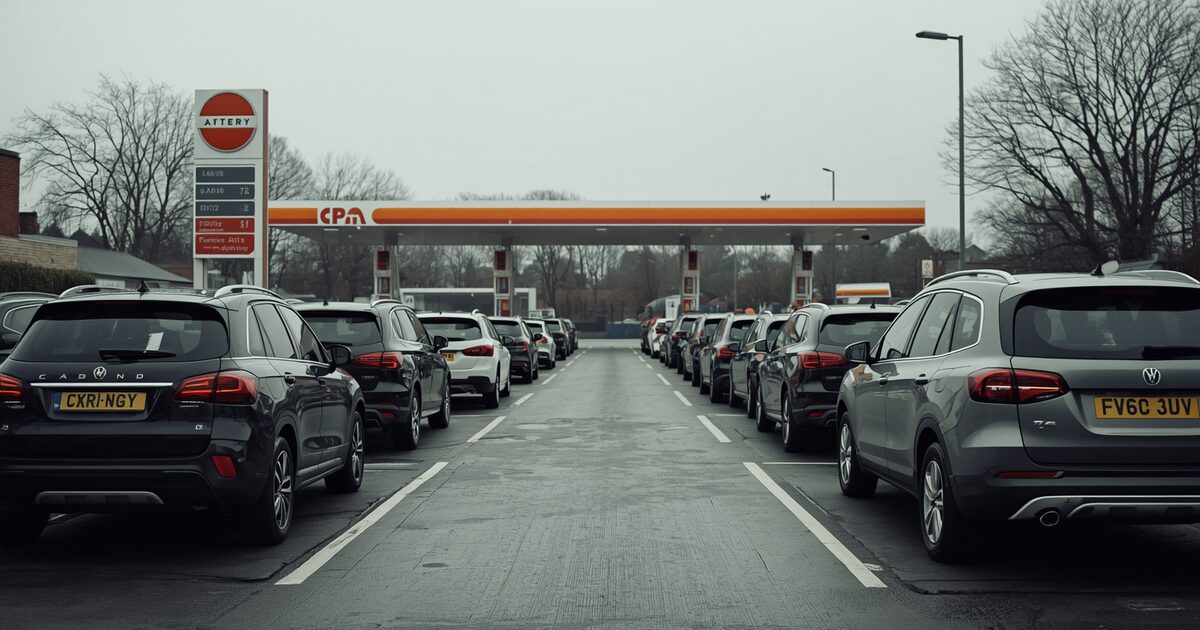
The September 2021 fuel crisis — when petrol stations across England ran dry for 10–14 days — was caused entirely by domestic logistics, not global supply. A shortage of HGV tanker drivers, exacerbated by Brexit-related loss of EU drivers, meant that even though UK refineries and import terminals were fully stocked, fuel could not be transported to forecourts fast enough to meet demand. The crisis was then significantly worsened by media coverage triggering panic buying — which consumed 3–4 weeks of normal demand in 4–5 days.
The key lesson: when forecourts run low, individual rational decisions (fill up now before it gets worse) create collectively irrational outcomes (everyone filling up simultaneously accelerates the shortage). The government's response included emergency visas for foreign tanker drivers, military tanker deployment, and public messaging urging restraint. Drivers who maintained a half-tank buffer were largely unaffected by the crisis.
Government Emergency Plans
The UK has detailed emergency fuel planning under the Energy Act 2023 and the National Fuel Emergency Plan. In a declared fuel emergency, the government has powers to: direct allocation of fuel supplies to priority users (emergency services, utilities, food supply chain); restrict retail sales to specified quantities per vehicle; requisition private fuel storage facilities; and deploy military logistics to supplement civilian tanker capacity. These powers are exercised through the Civil Contingencies Secretariat and would be activated within 24–48 hours of a declared shortage.
What Drivers Should Do
The correct response to shortage risk is measured rather than panicked. Keep your tank above the quarter mark as a routine habit — this gives you 2–4 days of normal driving range even in a disruption event. Do not fill multiple jerry cans unless you have a legitimate operational need (farm equipment, backup generator) — hoarding aggravates shortages. Monitor FuelFinderLive's availability data — in a shortage event, we will display station availability status alongside prices. Follow DESNZ and RAC communications for authoritative guidance on any shortage developments. And remember: the 2021 crisis resolved within 2 weeks once panic buying subsided. Maintaining calm and rational behaviour is both individually sensible and collectively beneficial.
Find the Cheapest Fuel Near You
Use FuelFinderLive to compare live petrol and diesel prices at stations in your area.
⛽ Find Fuel Now