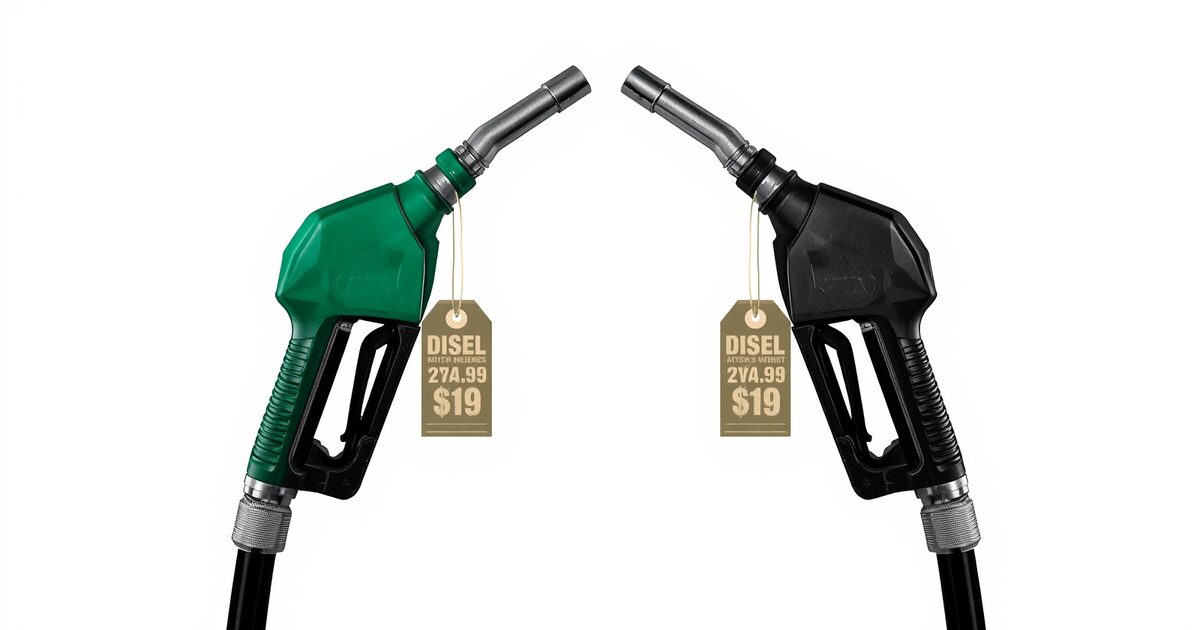
Why Is Diesel More Expensive Than Petrol in the UK? The Full Explanation
At 182.7p per litre (March 2026), diesel is 29.8p more expensive than petrol. Understand the real reasons: refinery physics, geopolitical supply shocks, and structural demand imbalances.
The Diesel Price Gap Explained
In March 2026 UK drivers are paying 182.7p per litre for diesel versus 152.9p for petrol — a gap of 29.8p. That premium costs a typical diesel car driver roughly £16 extra every time they fill a 55-litre tank. For van and HGV operators filling up daily, the gap translates to thousands of pounds in additional annual expenditure.
This was not always the case. For most of the 2000s diesel was actually cheaper than petrol in the UK. The reversal began around 2011 and has been persistent ever since, driven by a convergence of refining economics, taxation, geopolitics, and structural demand shifts.
Key figures (March 2026)
| Metric | Petrol | Diesel |
|---|---|---|
| Pump price | 152.9p | 182.7p |
| Fuel duty | 52.95p | 52.95p |
| VAT (20%) | 25.5p | 30.5p |
| Pre-tax cost | 74.4p | 99.3p |
Refinery Yield Ratios
Every barrel of crude oil contains a fixed mixture of hydrocarbon fractions. When a modern UK refinery processes a barrel of North Sea Brent crude, the approximate output is 44% petrol (gasoline), 28% diesel/gasoil, 14% jet fuel, and 14% other products. Because diesel accounts for a smaller share of each barrel than petrol, producing more diesel requires either processing more crude or running expensive secondary cracking units.
European refineries built in the 1970s were designed primarily for petrol production, reflecting road-traffic demand at the time. Retrofitting them to produce more diesel is capital-intensive and takes years. This structural limitation means that sudden surges in diesel demand cannot be quickly met by increased refinery output.
Fuel Duty Comparison
Both petrol and diesel attract exactly the same rate of fuel duty in the UK: 52.95p per litre following the March 2022 5p cut. VAT at 20% is then charged on the total price including duty. Because diesel has a higher pre-tax price, the VAT component in absolute terms is larger — but the duty rate is identical. The idea that diesel is taxed more heavily than petrol at a flat-rate level is a common misconception.
European Diesel Demand Profile
Europe collectively consumes significantly more diesel than petrol. The continent's decades-long policy of taxing diesel more favourably to encourage fuel-efficient commercial vehicles created a cultural shift towards diesel passenger cars. By 2015, over 50% of new cars sold in Western Europe were diesel. This massive demand concentration meant European refineries were essentially bidding against each other for the same limited diesel pool, structurally elevating prices.
Since the Volkswagen Dieselgate scandal of 2015 and tighter Euro 6 emissions rules, diesel passenger car sales have dropped sharply. However, HGVs, buses, trains, and agricultural machinery remain overwhelmingly diesel-powered, meaning commercial demand keeps a firm floor under prices.
Russia's Diesel Ban Impact
Russia was historically one of Europe's largest diesel exporters, supplying approximately 10% of EU diesel consumption. When the UK and EU banned Russian oil product imports in February 2023 as part of sanctions following the Ukraine invasion, European refineries had to source diesel from more expensive, more distant alternatives: Middle Eastern refineries, US Gulf Coast exporters, and Indian re-exports.
This supply reorganisation added both cost and logistical complexity to the European diesel supply chain, pushing prices higher and making the market more sensitive to any further disruptions — including the Iran conflict that began in 2026.
Iran War & Middle East Crisis
The US-Israeli military action against Iran's nuclear and oil facilities that began on 28 February 2026 has had a disproportionate impact on diesel versus petrol. Iran is a major producer of gas oil (the feedstock from which diesel is refined), and the Strait of Hormuz — threatened with closure during the conflict — carries approximately 20% of all seaborne oil. Diesel, being a "middle distillate," is particularly exposed to supply chain disruption because it requires specific refinery processing steps that cannot simply be substituted.
HGV & Freight Demand
Road freight, construction machinery, agricultural equipment, fishing vessels, and off-road power generation all run on diesel. These sectors have very inelastic demand — a haulier cannot switch to petrol lorries when diesel prices spike, and a farmer cannot harvest crops without diesel-powered machinery. This inelastic demand means diesel commands a structural premium because buyers will pay whatever is needed to keep operations running.
When Will the Gap Narrow?
The diesel premium is unlikely to disappear in the near term. The factors sustaining it — Russian sanctions, Middle East instability, inelastic freight demand, and refinery configuration — are all medium-to-long term structural issues. Analysts at the Energy Information Administration forecast the diesel-petrol gap to remain above 20p per litre throughout 2026. If the Iran conflict de-escalates and Brent crude falls below $75/barrel, the gap could narrow to 15–18p, but is not expected to return to pre-2011 levels of parity.
The shift towards electric vans and trucks, encouraged by the government's ZEV mandate, should begin to reduce structural diesel demand by the late 2020s. However, fleet replacement cycles of 7–10 years mean this transition will take time to move prices meaningfully.
Advice for Diesel Owners
If you drive a diesel vehicle today, the most effective ways to mitigate the premium are to use FuelFinderLive to find the cheapest diesel near you (price variation can exceed 10p/litre across stations in the same town), fill up at supermarket forecourts where diesel is typically 6–8p cheaper than branded stations, consider joining a fuel card scheme if you run a business fleet, and review whether your next vehicle purchase should be an EV or plug-in hybrid given the trajectory of diesel prices.
Find the Cheapest Fuel Near You
Use FuelFinderLive to compare live petrol and diesel prices at stations in your area.
⛽ Find Fuel Now