Why Petrol Prices Vary Across Different UK Regions: The Complete Explanation
UK petrol varies by over 12p per litre between regions. We explain why — refinery proximity, supermarket competition, transport costs, and the rural premium — and how to beat it.
The Regional Price Gap
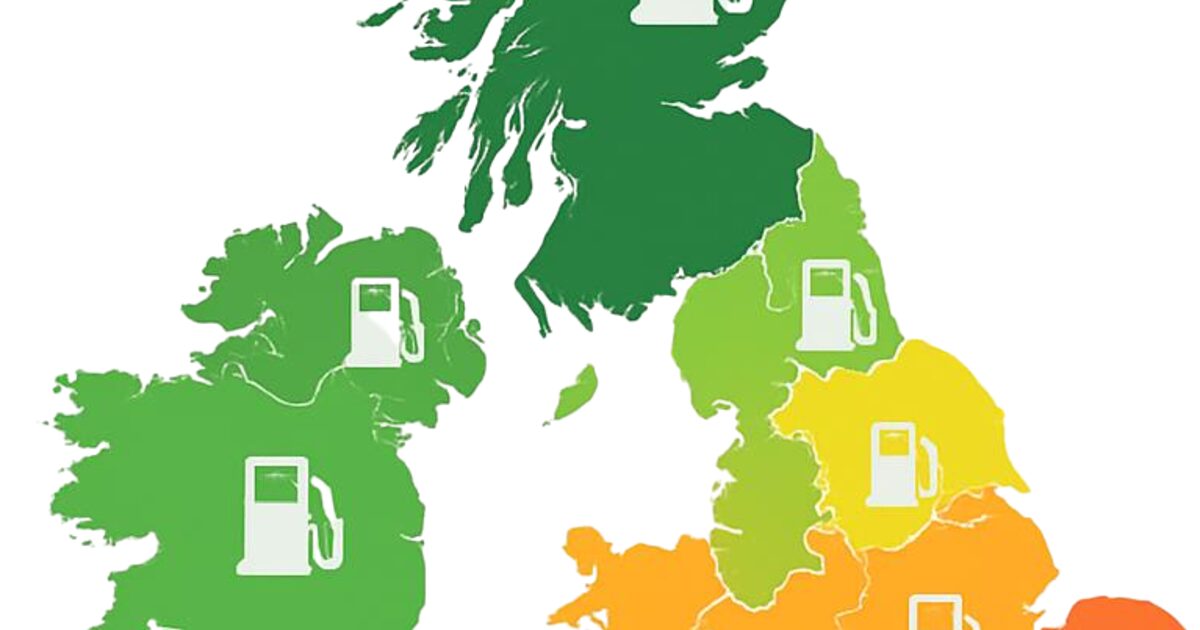
The UK's national average petrol price in March 2026 is 152.9p per litre. But that single national figure conceals a variation of over 12p between the cheapest and most expensive UK regions — and within regions, individual station variation of up to 20p in some areas. Northern Ireland drivers face the highest average prices (157.1p), while drivers in Yorkshire & Humber and the East Midlands can often fill at prices 5–7p below the national average. Understanding why these regional differences exist — and how to exploit them — is practically valuable for every UK driver.
Why Prices Vary by Region
Regional petrol price variation is driven by four main factors working in combination. Transport and distribution costs vary with distance from refineries and import terminals. Local competitive dynamics depend on the density and mix of forecourt types (supermarket, branded, independent) in each area. Local demand patterns affect throughput and therefore operating costs per litre. And property and rates costs for station sites vary enormously from rural Yorkshire to central London, feeding into margin requirements. No single factor determines regional pricing — it is the interaction of all four that creates the regional map we observe.
Transport & Distribution Costs
UK crude oil is primarily refined at facilities in Fawley (Hampshire), Stanlow (Cheshire), Lindsey (Lincolnshire), and Pembroke (Wales). Refined product then travels via the UK Pipeline System (UKPS) — a 2,000km network of pipes connecting refineries to major distribution terminals — supplemented by road tanker delivery from terminals to forecourts. Areas close to major refineries and well-served by the pipeline system (North West near Stanlow, East Midlands near Lindsey, Humber near both Lindsey and import facilities at Immingham) tend to have lower wholesale delivered costs. Remote areas served primarily by road tanker from distant terminals face higher delivered costs of 0.5–2p per litre.
Scotland's higher prices partly reflect its distance from major refineries (Grangemouth was the main Scottish refinery before its 2025 closure, removing domestic refining capacity entirely) and the additional transport cost of supplying remote Highland and Island communities. Northern Ireland's premium reflects its island geography and the additional cost of ferry transport for refined product.
Local Competition Effects
The single biggest determinant of local price variation is competitive intensity — specifically, whether there is a supermarket forecourt in the local market. Areas with a nearby Asda, Morrisons, Sainsbury's, or Tesco forecourt consistently show prices 4–8p lower than comparable areas served only by branded and independent stations. Supermarkets use aggressive fuel pricing to draw shoppers, and the competitive response from nearby stations keeps all local prices lower than they would otherwise be.
The CMA found in its 2023 fuel market review that the entry of a supermarket forecourt into a local market reduced the average price of all nearby stations by 2–4p per litre within 6 months. Conversely, towns without any supermarket forecourt and limited branded competition (typically rural market towns) show persistently elevated prices. Motorway service areas, which operate with a captive audience and no local competition, are the extreme case — charging 15–25p above the nearest town.
Price Analysis by Region
North West (avg 150.4p): Proximity to Stanlow refinery and strong supermarket competition (particularly Asda's northern heartland) keeps prices below average. Manchester, Liverpool, and Preston areas are among the best-value fuel markets in England.
Yorkshire & Humber (avg 149.8p): Strong supermarket presence (Morrisons' home territory) and proximity to Lindsey refinery and Immingham import terminal create highly competitive conditions. Sheffield, Leeds, and Hull are consistently below-average price areas.
East Midlands (avg 150.1p): Similar advantages to Yorkshire — Lindsey proximity and multiple supermarket competitors in most towns.
London (avg 156.2p): High property costs for station sites, Congestion Charge delivery costs, and lower throughput at many constrained inner-city sites push prices above average. Outer London (zones 4–6) is significantly cheaper than inner London (zones 1–3).
Scotland (avg 155.6p): Post-Grangemouth closure, all refined product must be imported to Scotland, adding transport costs. Highlands and Islands face the largest premium — some remote stations exceed 170p even when mainland Scotland averages 155p.
The Rural Premium
Rural petrol stations face a structural cost disadvantage: lower throughput (fewer customers per day) means fixed costs are spread over fewer litres, requiring higher margins per litre to remain viable. A busy urban supermarket forecourt might sell 50,000 litres per day; a rural village station might sell 2,000 litres per day. The margin per litre needed to cover fixed costs is proportionally higher at the rural site. This rural premium is real, persistent, and not easily addressed without either accepting it or driving to the nearest town for cheaper fuel.
FuelFinderLive data shows that the rural premium averages 4–8p per litre across the UK, rising to 12–18p in the most remote areas (Scottish Highlands, rural Wales, parts of Northern Ireland). For drivers in these areas, the economics of driving 15–20 miles to a town supermarket for a major fill-up can still make sense — a 15p saving on 60 litres is £9, easily covering the fuel cost of a 20-mile round trip.
Finding the Cheapest Fuel in Your Region
The most effective way to find the cheapest fuel in your specific area is FuelFinderLive — our live data covers all mandatory-reporting stations nationwide, updated every 5 minutes. Search your postcode, select your fuel type, set your search radius, and see every station ranked by current price. The map view immediately reveals the competitive landscape of your local area — if there is a cluster of cheap stations 3 miles away that you have been unaware of, FuelFinderLive shows you instantly. Commit to checking before every fill-up and you will consistently fill at the cheapest available price in your region, regardless of whether you are in a high-price or low-price area on the national average.
Find the Cheapest Fuel Near You
Use FuelFinderLive to compare live petrol and diesel prices at stations in your area.
⛽ Find Fuel Now